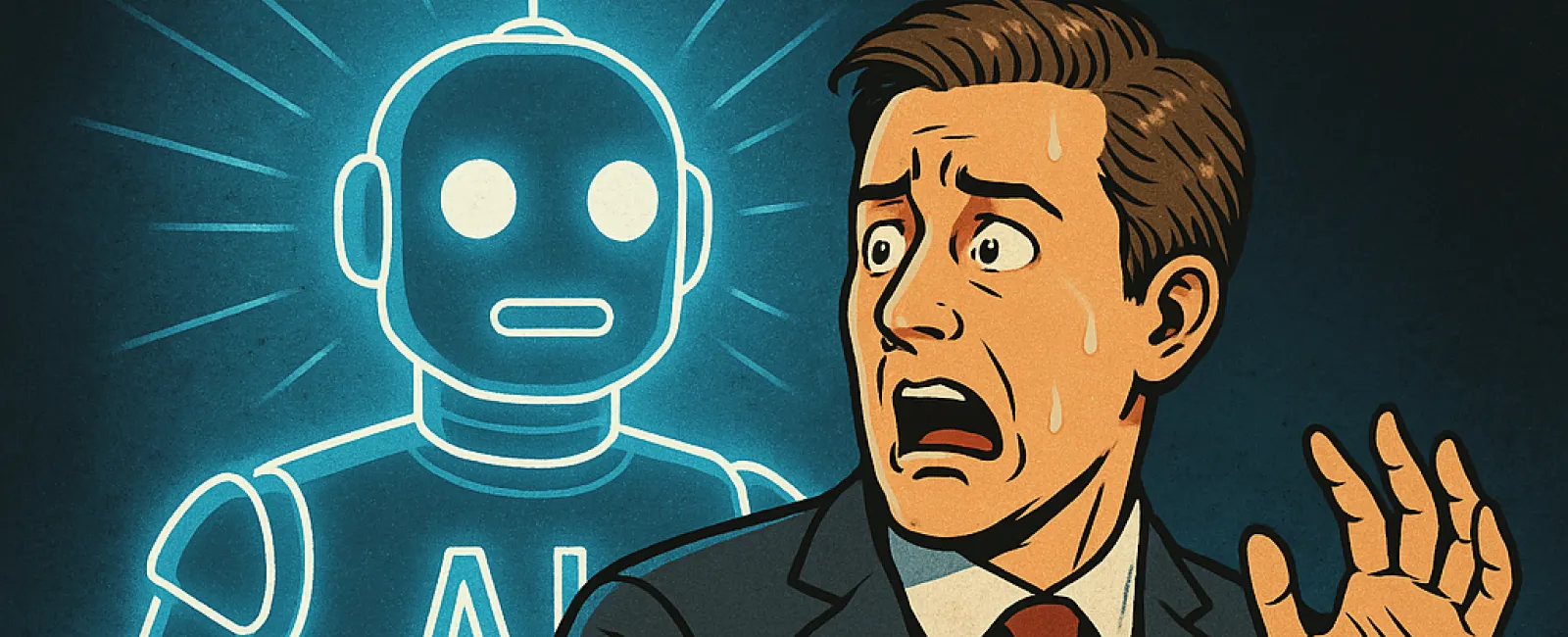
Artificial Intelligence is advancing at lightning speed, revolutionizing the way businesses operate. While this innovation brings exciting opportunities, it also opens the door for cybercriminals who have equal access to AI technology. Let's uncover the hidden threats lurking in the shadows and learn how to defend your business.
Beware of AI Doppelgängers in Video Conferences - The Threat of Deepfakes
Deepfake technology powered by AI has reached unsettling levels of realism, enabling hackers to execute sophisticated social engineering attacks on organizations.
For example, a security firm recently observed an incident where an employee of a cryptocurrency foundation was deceived during a Zoom call by multiple deepfake impersonations of their company's executives. These fake leaders instructed the employee to download a Zoom extension granting microphone access, which facilitated a cyberattack linked to North Korea.
This new type of scam disrupts traditional verification methods. To protect your business, watch for signs such as unnatural facial movements, awkward pauses, or inconsistent lighting during video calls.
Stay Alert: AI-Powered Phishing Emails Are More Convincing Than Ever
Phishing emails have long been a threat, but AI tools now craft emails that mimic human language flawlessly, removing usual giveaways like poor grammar or spelling mistakes.
Cybercriminals are also integrating AI to translate phishing pages and emails into multiple languages, allowing their scams to reach a global audience more effectively.
Despite these advances, strong security practices remain effective. Multi-factor authentication (MFA) adds a powerful layer of protection by requiring access to a physical device, which attackers typically lack. Furthermore, ongoing security training equips employees to spot subtle warning signs like urgent or unusual messages.
Fake AI Tools: Malware Disguised as Helpful Software
Malicious actors exploit the hype around AI by distributing fake AI-related software that conceals dangerous malware. These counterfeit tools often appear to work but secretly infect devices.
For instance, a TikTok campaign promoted "cracked" software tools to bypass licensing for apps like ChatGPT using PowerShell commands. However, this was a malware distribution scheme later uncovered by security experts.
To protect your business, insist that your managed service provider reviews any new AI software before installation, and maintain strong security awareness programs among your staff.
Ready to Safeguard Your Business from AI-Enabled Threats?
Don't let AI-driven cyber threats keep you awake at night. From deepfake scams to AI-enhanced phishing and malicious software, attackers are evolving — but with the right strategies, your business can stay ahead and secure.Click here or give us a call at 608-416-2400 to schedule your free 10-Minute Discovery Call today and let's talk through how to protect your team from the scary side of AI ... before it becomes a real problem.