Remember the days of blowing into Nintendo cartridges to get them working? That was our version of tech support back then.
Cartridge not loading? Blow on it gently. Still no luck? Blow harder.
If that didn't work, you gave the console a good smack.
We thought we had technology figured out.
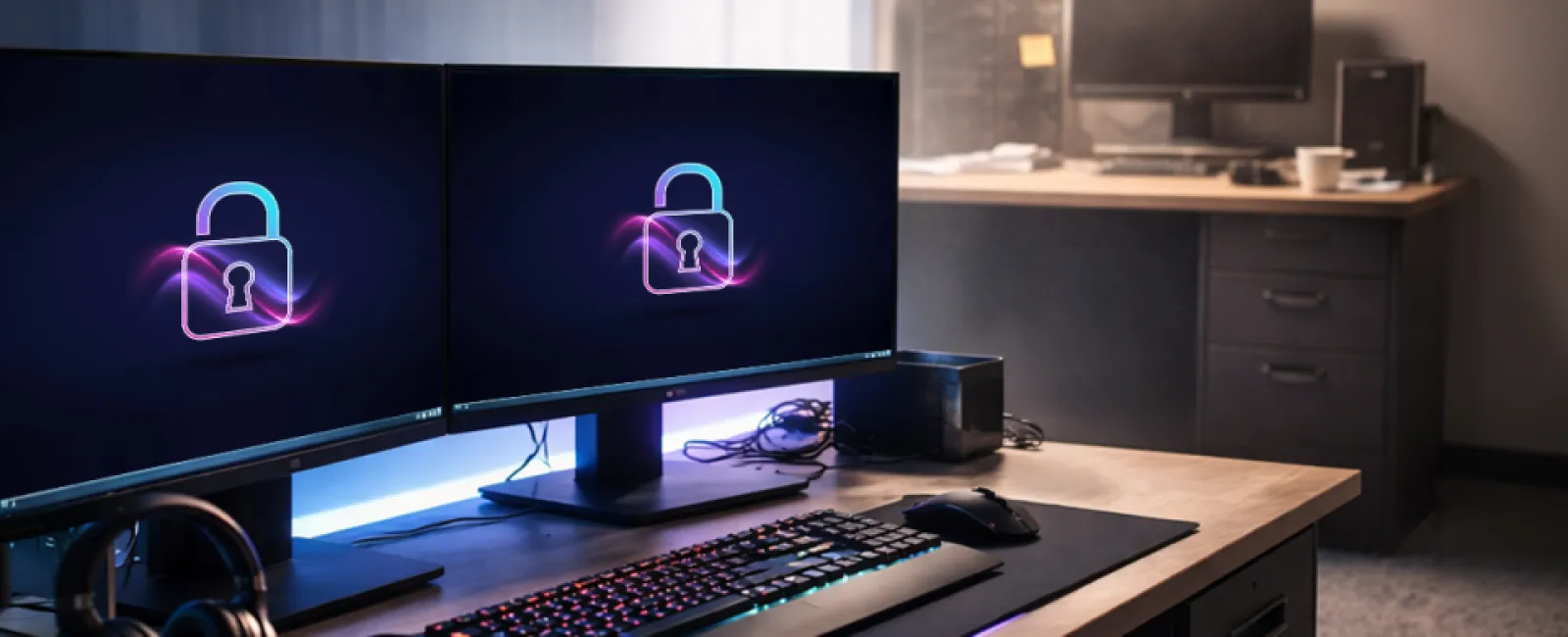
But today's kids? They don't fix things with hits. Their setups boast solid-state drives, 32GB RAM, processors capable of rendering small films, mesh Wi-Fi that eliminates dead zones, real-time performance tracking, and multi-factor authentication safeguarding every login.
Each setup is finely tuned, optimized, and expertly maintained.
Now, consider your office environment.
There's a 2019 workstation that takes four minutes to boot up, a printer that jams predictably every Tuesday, shared folders with names like "New New Final FINAL," incompatible software, spotty Wi-Fi in the conference room, and laptops with "Restart to update" pop-ups ignored daily for weeks.
Gamers upgrade continuously. Businesses often accept inefficiency.
And this difference costs more than most realize.
Why Gamers Consistently Outperform
This isn't about budget. A solid gaming PC and a business workstation cost roughly the same. Business internet tends to be faster than home connections. Network monitoring and security tools are affordable.
The critical factor is focus.
Gamers promptly update everything — operating systems, graphics drivers, firmware, game patches — because outdated software means lag and lost games. Your kid probably updated the latest patch at 11:30 PM, no matter it was a school night.
Conversely, every delayed update on your office computers leaves you vulnerable. Software developers have patched these issues, but the fixes haven't been applied.
Gamers religiously back up their game saves. One costly loss teaches them to never slack on backups again. According to Nationwide Insurance, nearly 68% of small businesses lack a documented disaster recovery plan. Losing your business data can mean losing clients, records, finances, and even the ability to operate.
Gamers actively track performance — CPU temps, frame rates, ping, disk usage — catching tiny dips before they become issues. Business owners, on the other hand, often find out something's wrong only when someone complains, "The internet is slow today." Waiting for complaints is not monitoring.
Your kid wouldn't tolerate running their setup this way. Yet, that setup isn't paying salaries.
How Office Tech Gets Messy
No one intentionally designs a chaotic office network.
Business technology usually expands organically. New tools are added to solve problems over time: accounting software, CRM, file sharing, payroll, security layers—it's a gradual build-up.
Nothing was wrong initially, but over time, technology stops being designed with purpose and starts accumulating. This buildup creates friction and inefficiency.
Gaming setups are crafted deliberately for peak performance. Most business systems evolve out of convenience rather than strategy. One is intentional; the other accidental—and accidental systems become costly.
Back in the cartridge days, ignorance was an excuse. Your business no longer has that luxury. The right tools and knowledge are available; the real question is whether someone's paying attention.
The Hidden Cost of 'Just Fine'
The true cost doesn't come as a single catastrophic failure. It sneaks in through daily inefficiencies everyone accepts.
Five minutes wasted waiting for slow logins, three minutes hunting for misfiled documents, duplicating data entry in unsynced systems, rebooting devices multiple times a week, and creating workaround solutions become business as usual.
UC Irvine studies reveal it takes an average of 23 minutes to regain focus after interruptions. So five-minute tech glitches actually cost closer to 30 minutes.
Multiply that across your entire team, five days a week, 52 weeks a year—that's tens of thousands of lost work hours hidden in plain sight.
In gaming, lag is intolerable. In business, lag becomes accepted—and "acceptable" is the most expensive word in tech.
The Critical Question
Most business owners respond to tech questions with "it works fine."
But "working" and "working efficiently" are worlds apart.
Are your systems integrated or merely coexisting? Are tools streamlined or layered on top of each other? Is your technology supporting your processes, or are your processes bending around your tech? Is someone monitoring your network with the vigilance of a gamer watching frame rates—proactively, continuously, before issues arise?
Hardware cycles through, but software optimization, automation, security layers, and process design are what truly boost productivity and profits—and none of that improves itself.
Test Your Tech Insight
Before you leave, ask yourself:
· Do you know when your oldest office computer was purchased?
· Can you confirm your backups ran successfully last week?
· Is there a device on your network with an ignored pending update older than a week?
· Could you state your office internet speed without checking?
Your kid can answer all these questions about their gaming setup without hesitation.
If you can't answer them about your business systems, it's not a failure—it just means no one is watching. And that's a problem we can fix.
How We Assist
We guide businesses from clutter to clarity by taking a comprehensive look at your technology—what's redundant, outdated, slowing you down, or ripe for simplification and automation.
Our focus isn't more technology—it's smarter, more effective technology.
If you're ready to evaluate how your systems, software, and workflows impact your productivity and profitability—or where hidden costs lie—we're here to talk.
No jargon. No pressure. No gamer comparisons required.
Click here or give us a call at 608-416-2400 to schedule your free 10-Minute Discovery Call.
Know another business stuck in tech limbo? Share this.
Because in business—as in gaming—performance drives success.