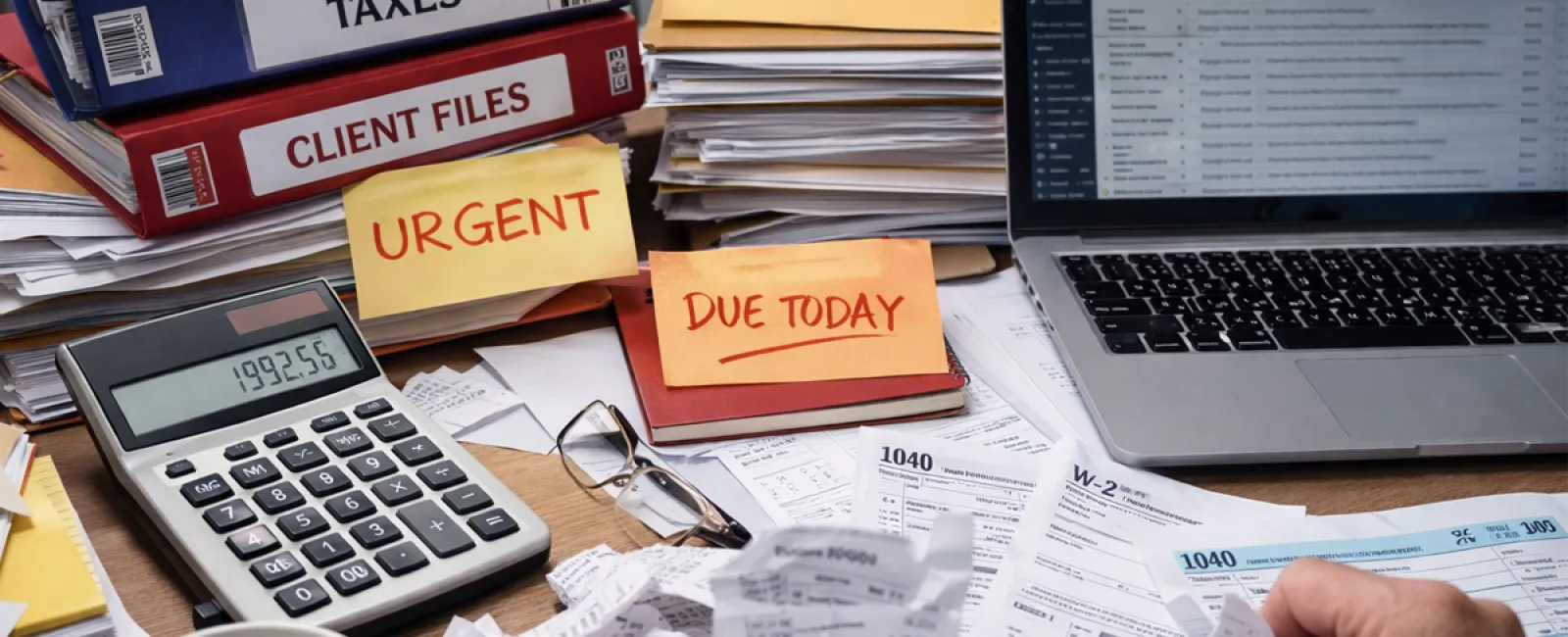
March is here.
Your accountant is overwhelmed, your bookkeeper is hustling, and deadlines are rapidly approaching. Emails are flooding in with no end in sight.
Everyone is heads down, struggling to survive the month.
This tension isn't news to you.
But it's not news to cyber criminals either.
Data shows a sharp surge in phishing scams during tax season, with March experiencing about a 28% rise in tax-related scam emails compared to other times of year. These attacks are subtle and crafted to mimic routine business communications exactly when your team is busiest.
This is no accident.
It's perfectly timed.
Here's what's ahead and four straightforward ways to keep your business from becoming an easy victim.
The Overwhelmed Supply Chain
Most miss this critical fact:
Hackers don't just target accounting departments.
They prey on the chaos surrounding them.
During tax season:
- Clients quickly send sensitive documents without usual caution
- Staff rushes and bypasses critical verification processes
- "Just send it over" replaces standard security practices
- Checks and confirmations are skipped due to overwhelming workload
The entire business flow accelerates.
And rushing is where errors thrive.
Hackers avoid careful, deliberate companies.
They exploit those under pressure.
March is undeniably hectic.
Recognizing These Attacks
This isn't fiction.
It's an email indistinguishable from those you get daily.
- "Your accountant" requests you resend W-2 forms claiming a transmission error
- A vendor notifies you of changed bank details needing urgent update
- A DocuSign link demands your signature on a tax document immediately
- "Your CEO" sends urgent requests while traveling and unavailable
None raise suspicion.
They appear like typical March business transactions.
This is why these scams succeed.
Why Busy Professionals Fall for Scams
This doesn't happen because anyone is careless.
It's human nature.
When inboxes overflow and deadlines pile up, people skim emails, make assumptions, and react quickly.
Scammers exploit this tendency.
Their messages are crafted for hurried eyes, slipping past unnoticed errors.
They don't need recklessness—just a busy schedule.
And March is packed.
Four Easy Habits to Avoid Becoming a Target
The best news? You don't need complex software or an expert security team.
Some simple, deliberate practices during rush periods can dramatically lower your risk.
1. Confirm payment changes by phone
When an email claims a vendor's bank info has changed, do not reply directly.
Call a verified number to confirm before acting.
This small step can stop some of the costliest fraud attempts.
2. Pause on sensitive information requests
Urgency should trigger a careful review, not a rush.
If someone demands immediate access to W-2s or tax files, verify before sending.
A genuine sender won't mind a brief delay, but scammers will.
3. Validate "urgent" messages through alternative channels
If an email stresses urgency, check via phone, text, or in-person message.
A quick second confirmation can prevent costly mistakes.
Real emergencies withstand a moment's scrutiny; fake ones do not.
4. Brief your team about scam risks
This week, alert your staff that tax season attracts scams.
Encourage them to slow down, double-check facts, and ask questions if something feels odd.
This small mindset shift could save you from big cleanup later.
Key Takeaway
Tax season is stressful enough — don't let scams add to your troubles.
The scams this time of year aren't sophisticated, just perfectly timed.
They exploit rushing, assumptions, and the drive to push through March.
You don't need a major system overhaul to protect yourself.
You just need to slow down and verify when urgency strikes.
That simple change is often all it takes.
Is Your Business Ready for Tax Season?
If your company already has solid security habits, that's fantastic.
But if tax season drives your team into reactive mode or your approach to urgent requests feels uncertain, consider a quick sanity check with a free 10-Minute Discovery Call.
No pressure, no fear tactics—just a clear view on small adjustments that could prevent big headaches.
If this message isn't for you, please share it with someone who may benefit.
Click here or give us a call at 608-416-2400 to schedule your free 10-Minute Discovery Call.